Average Pages Read Per Hour for Adults and Students
June 8, 2026 | By Liam Spencer
If you are trying to plan a study session, a commute, or a weekend reading goal, the average pages read per hour is a useful estimate, but it is not one fixed number. A light novel, a dense textbook, and a research article can all produce very different page counts from the same reader. A better question is: how many words are on the page, how fast are you reading those words, and how much attention does the material require? You can use a reading speed and comprehension baseline to turn that guess into a more practical number.

The Short Answer: Most Readers Finish 20 to 60 Pages Per Hour
For everyday reading, many adults land somewhere around 20 to 60 pages per hour. The lower end is common for textbooks, unfamiliar nonfiction, technical material, or reading that requires notes. The higher end is more likely for familiar fiction, simple nonfiction, or rereading material you already understand.
The biggest reason the range is so wide is that pages are not a standard unit. A mass-market paperback might have 250 to 300 words per page. A textbook page can carry 600 to 800 words, charts, footnotes, and new concepts. At 250 words per minute, a reader could move through about 50 to 60 light paperback pages in an hour, but only about 18 to 25 dense textbook pages.
So when someone asks, "How many pages can the average person read per hour?" the honest answer is: it depends on page density and purpose. For relaxed reading, 40 to 60 pages per hour can be normal. For learning, 10 to 30 pages per hour may be more realistic. For highly technical work, even 5 to 15 pages per hour can be reasonable if the goal is careful understanding.
Why Average Reading Speed in Pages Per Hour Changes So Much
Pages per hour looks simple, but it combines several variables. If you only compare your page count with someone else's, you may feel slow when you are actually doing harder reading.
Page Density
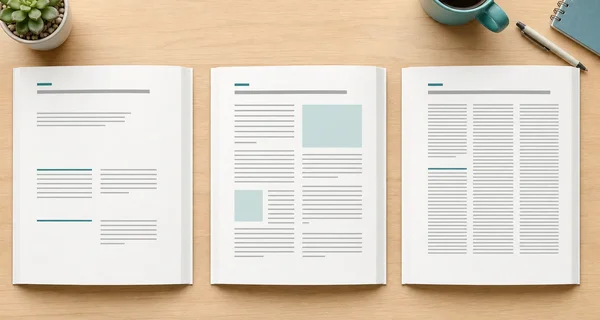
Page density means the number of words, diagrams, tables, and visual interruptions on a page. Two books can both say "300 pages" and still represent completely different workloads. A page with wide margins and short dialogue is not the same as a page with compact academic prose.
Use this rough guide:
| Page type | Common words per page | What it means for pace |
|---|---|---|
| Light fiction or easy nonfiction | 250-300 | Higher pages per hour |
| Trade nonfiction or essays | 300-450 | Moderate pages per hour |
| Monographs or professional books | 500-650 | Slower pages per hour |
| Textbooks or technical material | 650-800+ | Much slower pages per hour |
This is why average reading time per page can be anywhere from under a minute to five minutes or more. The page count alone hides the actual word load.
Reading Purpose
Reading purpose changes speed as much as page density. Surveying a chapter for the main idea is faster than reading to remember details. Reading for a class, exam, client brief, or research project usually involves pauses, notes, rereading, and decisions about what matters.
If your purpose is casual enjoyment, your reading rate may stay close to your natural silent-reading speed. If your purpose is learning, your average reading speed pages per hour usually drops because comprehension work is part of the task. That slower pace is not automatically a problem; it may mean you are processing the material more deeply.
Familiarity, Language, and Focus
You will usually read faster when the vocabulary, topic, and format feel familiar. You will slow down when the subject is new, the language is not your strongest language, or the page asks you to interpret formulas, tables, legal language, or unfamiliar terminology.
Focus also matters. A tired reader may read the same page three times. A focused reader may finish fewer pages but remember more. Pages per hour is useful only when paired with a quick comprehension check: can you explain the key point after reading?
A Simple Formula for Estimating Your Own Pages Per Hour
The easiest way to estimate your average pages per hour reading speed is to convert words per minute into words per hour, then divide by words per page.
Use this formula:
Pages per hour = (words per minute x 60) / words per page
Here are examples:
| Reading speed | Page density | Estimated pages per hour |
|---|---|---|
| 200 wpm | 300 words per page | 40 pages |
| 250 wpm | 300 words per page | 50 pages |
| 300 wpm | 300 words per page | 60 pages |
| 250 wpm | 500 words per page | 30 pages |
| 250 wpm | 750 words per page | 20 pages |
| 150 wpm | 750 words per page | 12 pages |
To make the estimate more personal, time yourself for five to ten minutes on the same type of material you actually need to read. Count or estimate the words per page, then calculate your pace. A quick online reading speed check can also help you compare your WPM with your comprehension, which matters more than a page number by itself.
If you do not know the words per page, use 300 words for a light book, 450 words for standard nonfiction, and 750 words for dense textbook material. The estimate will not be perfect, but it will be much better than assuming every page takes the same amount of time.
Average Reading Speed Pages Per Minute and Per Day
Pages per minute is just pages per hour divided by 60. If you read 45 pages per hour, that is 0.75 pages per minute. If you read 20 pages per hour, that is about 0.33 pages per minute, or one page every three minutes.
Pages per day depends on reading time, not just speed. A person who reads 30 pages per hour for 20 minutes a day finishes about 10 pages daily. A person who reads 50 pages per hour for an hour finishes about 50 pages. Over a year, the difference becomes large: 10 pages per day is about 3,650 pages per year, while 50 pages per day is about 18,250 pages per year.
These numbers are helpful for planning, but they should stay flexible. If you are reading a difficult book, it is normal for your average pages read per day to fall. If the book is easy and enjoyable, the number may rise without any special technique.
How Many Pages Can You Read in an Hour and a Half?
To estimate an hour and a half, multiply your pages per hour by 1.5. If your pace is 20 pages per hour, 90 minutes gives you about 30 pages. If your pace is 40 pages per hour, 90 minutes gives you about 60 pages. If your pace is 60 pages per hour, 90 minutes gives you about 90 pages.
For planning, it helps to separate reading time from processing time. A 90-minute block might include 70 minutes of reading, 10 minutes of notes, and 10 minutes of short breaks. In that case, use 70 minutes in your estimate rather than the full 90. This is especially useful for school reading, professional reports, and nonfiction books where you need to retain ideas.
Is 100 Pages an Hour Fast Reading?
Yes, 100 pages an hour is fast for most real-world reading, especially if the material has 250 to 300 words per page. That pace often implies about 400 to 500 words per minute, and it becomes even more demanding if the pages are dense.
It may be possible for easy fiction, skimming, rereading, or very familiar material. It is less realistic for a textbook, legal document, research paper, or anything that requires careful recall. The practical question is not only "Can I pass 100 pages?" but "Can I explain what I read afterward?"
If your comprehension drops sharply, the page count is giving you a false sense of progress. A smaller number of well-understood pages is usually more useful than a large number of pages you cannot summarize.
When Slow Reading Speed Pages Per Hour Is Normal
A slow pages-per-hour rate is normal when the text is dense, unfamiliar, emotionally demanding, or important enough to require notes. It is also normal when you are learning a second language, returning to reading after a long break, or working through material with diagrams and technical vocabulary.
Instead of treating slow reading as a flaw, separate the cause:
- If the page is dense, adjust your page goal.
- If the topic is unfamiliar, preview headings before reading.
- If you keep rereading, pause and write a one-sentence summary.
- If your focus is low, shorten the session and retest later.
- If you need to remember details, plan note time as part of reading time.
The goal is not to force every book into the same pace. The goal is to match speed to purpose while keeping enough comprehension to make the session useful.
Use Pages Per Hour as a Baseline, Not a Score
The average pages read per hour is best used as a planning tool. It can help you estimate how long a chapter, book, or study block might take, but it should not become a personal scorecard. Your useful pace is the pace that lets you finish the material and still understand it.
If you want a more grounded estimate, choose a sample of the same material, time yourself, and check whether you can summarize the main idea. Then adjust the estimate for page density, reading purpose, and note-taking. The free reading pace tool can support that habit by giving you a repeatable way to reflect on WPM and comprehension before you set page goals.
FAQ
What is the average pages read per hour for adults?
Many adults read about 20 to 60 pages per hour, depending on the book. Light fiction may sit near the higher end, while nonfiction, textbooks, and technical material often sit near the lower end. A page with 750 words naturally takes longer than a page with 300 words.
Is 100 pages an hour fast reading?
Yes. For most readers, 100 pages per hour is fast. It may happen with easy books, skimming, or rereading, but it is not a reliable expectation for dense reading. Check comprehension before deciding whether the pace is actually useful.
What is the 50 page rule?
The 50 page rule is a personal reading habit some people use to decide whether to continue a book. The idea is to give a book about 50 pages before quitting or committing. It is not a reading speed rule, but it can help readers avoid forcing themselves through books that do not fit their goals.
Is it possible to read 200 pages in 2 hours?
It is possible in some situations, but it is very fast. Reading 200 pages in 2 hours means 100 pages per hour. That is more realistic for easy pages, skimming, or familiar material than for textbooks or detailed nonfiction.
Is reading 50 pages in 2 hours good?
Yes, reading 50 pages in 2 hours can be a solid pace, especially for nonfiction or study material. It equals 25 pages per hour. If you understand and remember the key ideas, that pace is useful.
What is the average reading time per page?
For a light 300-word page, many adults take about one to two minutes. For a dense 700- to 800-word page, the same reader may take three to five minutes or more. Notes, rereading, and unfamiliar terms can add time.
How do I calculate average reading speed words per hour?
Multiply words per minute by 60. A reader at 250 wpm reads about 15,000 words per hour before breaks or note-taking. To convert that into pages, divide by the estimated number of words per page.