How Do You Get Better at Reading? A Practical Guide for Adults, Students, and Tests
June 18, 2026 | By Liam Spencer
How do you get better at reading without turning every page into a race? The best answer is not one trick. It is a small system: measure your current pace, read with a purpose, check your understanding, and practice often enough that reading feels less effortful. If you want a simple starting point, a quick reading speed baseline can help you see how speed and comprehension work together before you choose what to improve. From there, the goal is not just faster reading. It is reading that is steadier, clearer, and easier to use in school, work, and everyday learning.
Start With a Baseline, Not a Vague Goal
Many readers say they want to "read better," but that phrase is too broad to practice. Better can mean finishing textbook chapters on time, remembering more from a business report, staying focused through a long article, spelling unfamiliar words more confidently, or improving scores on reading comprehension tests.
Start by naming the part of reading that feels hardest:
- Pace: you understand the text but move slowly.
- Comprehension: you finish pages but cannot explain the main idea.
- Retention: you understand while reading but forget later.
- Focus: your attention keeps slipping.
- Word accuracy: spelling, decoding, or unfamiliar vocabulary slows you down.
Then measure one simple baseline. You can time a short passage, note how many words you read, and write a two-sentence summary from memory. The summary matters because speed without understanding is just scanning. Repeat the same kind of check every week or two so your progress is based on evidence, not mood.
Read for Purpose Before You Read for Speed
Reading improves faster when every session has a job. Before you begin, ask: "What do I need from this text?" A student preparing for a quiz may need definitions, causes, dates, and examples. An adult reading for work may need risks, decisions, and next actions. A casual reader may simply want the story or big idea.
Purpose changes technique. If you need a broad overview, preview headings, introductions, charts, and summaries before reading closely. If you need detail, slow down around definitions and examples. If you need to compare arguments, take notes in pairs: claim on one side, evidence on the other.
This is also how to get better at reading comprehension tests. Most tests reward careful purpose-setting. Read the question stem, predict what kind of evidence you need, and return to the passage with a target. Do not try to memorize every sentence. Try to know where the answer lives and why the wrong answers are weaker.
Use Active Reading to Improve Comprehension
Passive reading feels smooth, but it often leaves little behind. Active reading makes your brain do something with the text while you move through it. That does not mean covering every page with highlighter marks. It means using a few repeatable moves.
Preview, Question, Read, Recall, Review
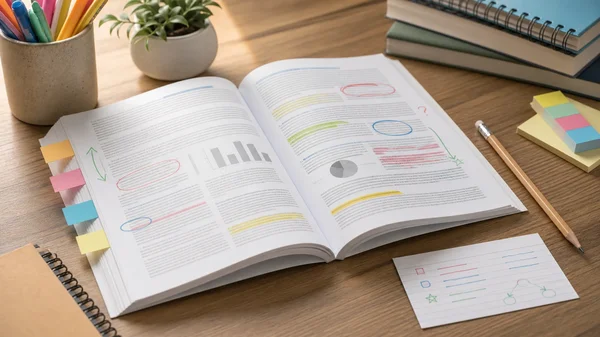
One practical version of the classic "5 R's" idea is preview, question, read, recall, and review. Preview the structure first. Turn headings into questions. Read a manageable section. Recall the main point without looking. Review only the places where your recall felt weak.
The recall step is the part many readers skip. After a page or section, close the book or look away from the screen and say the point in plain English. If you cannot say it, reread with a narrower question: "What is this paragraph trying to prove?"
Annotate With a Small Code
Use a simple note code instead of marking everything:
- Star the main idea.
- Circle unfamiliar words.
- Write "?" beside confusing logic.
- Write "ex" beside examples.
- Write "use" beside anything you can apply.
This keeps annotation from becoming decoration. It also helps you review quickly because each mark has a purpose.
Summarize in Your Own Words
At the end of a section, write one sentence that begins with "This section says..." and one sentence that begins with "This matters because..." The first sentence checks comprehension. The second checks meaning. Together, they train you to move beyond repeating phrases from the text.
If your summary is vague, the problem may not be your intelligence. The text may be dense, poorly organized, or full of assumed background knowledge. Slow down, define key terms, and rebuild the passage in smaller pieces.
Build Fluency With Small Daily Reps
Fluency is the ease of recognizing words, phrases, and sentence patterns. You build it through repeated exposure, not marathon sessions. Ten to twenty minutes of focused reading most days can do more than one exhausted weekend session.
Choose material at three levels:
- Comfortable reading for confidence and volume.
- Stretch reading for vocabulary and complexity.
- Purpose reading for school, work, or a specific life task.
Comfortable reading matters because it gives your brain many successful reps. Stretch reading matters because it expands your range. Purpose reading matters because you are more likely to remember ideas you can use.
To improve reading and spelling together, keep a small word log. When you meet a word you often misread or misspell, copy it, divide it into meaningful parts if possible, pronounce it carefully, and write one original sentence. Do not collect hundreds of words. Five useful words a week is enough to build momentum.
How Adults Can Get Better at Reading Without Starting Over
Adults often carry shame around reading because they assume they should already be good at it. That shame is unhelpful. Adult reading skill is shaped by practice history, stress, sleep, vocabulary, screen habits, and the kind of material you read most often.
If you are getting better at reading as an adult, begin with texts that matter to your real life. Work documents, books related to a goal, practical guides, essays, or articles in a field you care about will usually hold attention better than random drills. You can still read for pleasure, but improvement is easier when the material has a reason to exist.
Try a three-pass method for difficult nonfiction:
- First pass: skim headings, opening paragraphs, visuals, and final paragraphs.
- Second pass: read closely and mark main claims, key terms, and examples.
- Third pass: write a short action note or teach the idea to someone else.
This method works because it separates orientation, understanding, and retention. You are not asking your brain to do everything at once.
How Students Can Improve Reading Skills
Students need reading strategies that work under time pressure. The most useful habit is chunking. Break a chapter, article, or assignment into smaller sections and give each section a task: define terms, find the argument, list examples, compare causes, or prepare two questions for class.
For classroom reading, use the "before, during, after" pattern. Before reading, preview and predict. During reading, annotate lightly and pause after natural breaks. After reading, summarize, quiz yourself, and check the parts that felt uncertain.
Students also improve when they connect reading to output. If you know you will write a paragraph, solve a problem, join a discussion, or answer a short quiz, you read with sharper attention. Reading becomes preparation for a real task, not just moving your eyes across a page.
When students want a neutral way to compare pace and understanding over time, a reading speed and comprehension check can support reflection without replacing teacher feedback, tutoring, or classroom assessment.
What If Reading Is Hard Because of Dyslexia, Spelling, or Focus?
Some readers search for how to get better at reading with dyslexia, spelling struggles, or attention problems. The safest answer is to combine skill practice with appropriate support. A general reading website can explain strategies and help you reflect on progress, but it should not be treated as a clinical evaluation or a substitute for a qualified professional.
Practical supports may still help many readers:
- Use audiobooks or text-to-speech alongside print when it improves access.
- Choose dyslexia-friendly fonts or spacing if they reduce visual strain.
- Read in short blocks with planned breaks.
- Track confusing words in a small log.
- Use a ruler, card, or pointer if it helps line focus.
- Ask teachers, tutors, or specialists for accommodations when reading demands affect school or work.
The goal is not to force every reader into the same method. The goal is to find a reading setup that improves access, confidence, and comprehension.
A Simple 10-Step Reading Practice Plan
Here is a practical plan you can use for the next two weeks.
- Choose one reading goal, such as better test comprehension or steadier adult reading.
- Measure a baseline with a short timed passage and a short summary.
- Pick one comfortable text and one stretch text.
- Preview before reading: headings, visuals, key terms, and final paragraphs.
- Turn the main heading into a question.
- Read in chunks of three to five pages or one section at a time.
- Recall the main point before looking back.
- Write a two-sentence summary.
- Log five useful words per week.
- Remeasure after two weeks and compare speed, comprehension, and confidence.
If you want the top 10 ways to improve reading skills in one sentence, they are: measure a baseline, set a purpose, preview, chunk, annotate lightly, recall, summarize, build vocabulary, practice consistently, and review progress.
Measure Progress Without Turning Reading Into a Race
The healthiest way to get better at reading is to measure progress without worshiping speed. A higher WPM can be useful, but only when comprehension stays strong enough for the task. Some pages deserve slow reading. Some emails deserve a quick scan. Some textbooks need previewing, note-making, and review.

Use a free reading baseline as one signal, then combine it with your own notes: What did you understand? What did you remember? What felt easier than last week? What still needs support?
Over time, better reading should feel less like pushing harder and more like choosing the right gear. You know when to skim, when to slow down, when to ask questions, and when to stop and summarize. That flexible control is the real skill behind reading improvement.
FAQ
How do I improve my reading skills?
Improve reading skills by choosing one goal, reading regularly, previewing before you read, summarizing after short sections, and reviewing what you missed. Measure both speed and comprehension so you do not improve one while losing the other.
How do you get better at reading comprehension tests?
Read the questions carefully, identify what kind of evidence each question needs, and return to the passage with a purpose. Practice explaining why the right answer is supported and why the wrong answers are not. This builds accuracy, not just speed.
How do adults get better at reading?
Adults get better by using meaningful material, reading in short focused sessions, building vocabulary, and separating previewing from close reading. It helps to track progress over time instead of judging every session by how fast it felt.
What are the 5 R's of reading?
Different teachers use different versions, but a useful practice set is preview, question, read, recall, and review. The key is not the exact label. The key is moving from passive reading to active checking of understanding.
Does reading help with PTSD?
Reading may feel calming or meaningful for some people, and guided reading can be part of supportive routines. It is not a replacement for mental health care. Anyone dealing with trauma symptoms should consider support from a qualified professional.
Is reading good for Alzheimer's?
Reading can be a mentally engaging activity, and many people value it as part of lifelong learning. It should not be presented as prevention or treatment for Alzheimer's disease. For memory concerns, a qualified healthcare professional is the right source of guidance.