How Long Does It Take to Read 15 Pages?
August 28, 2026 | By Liam Spencer
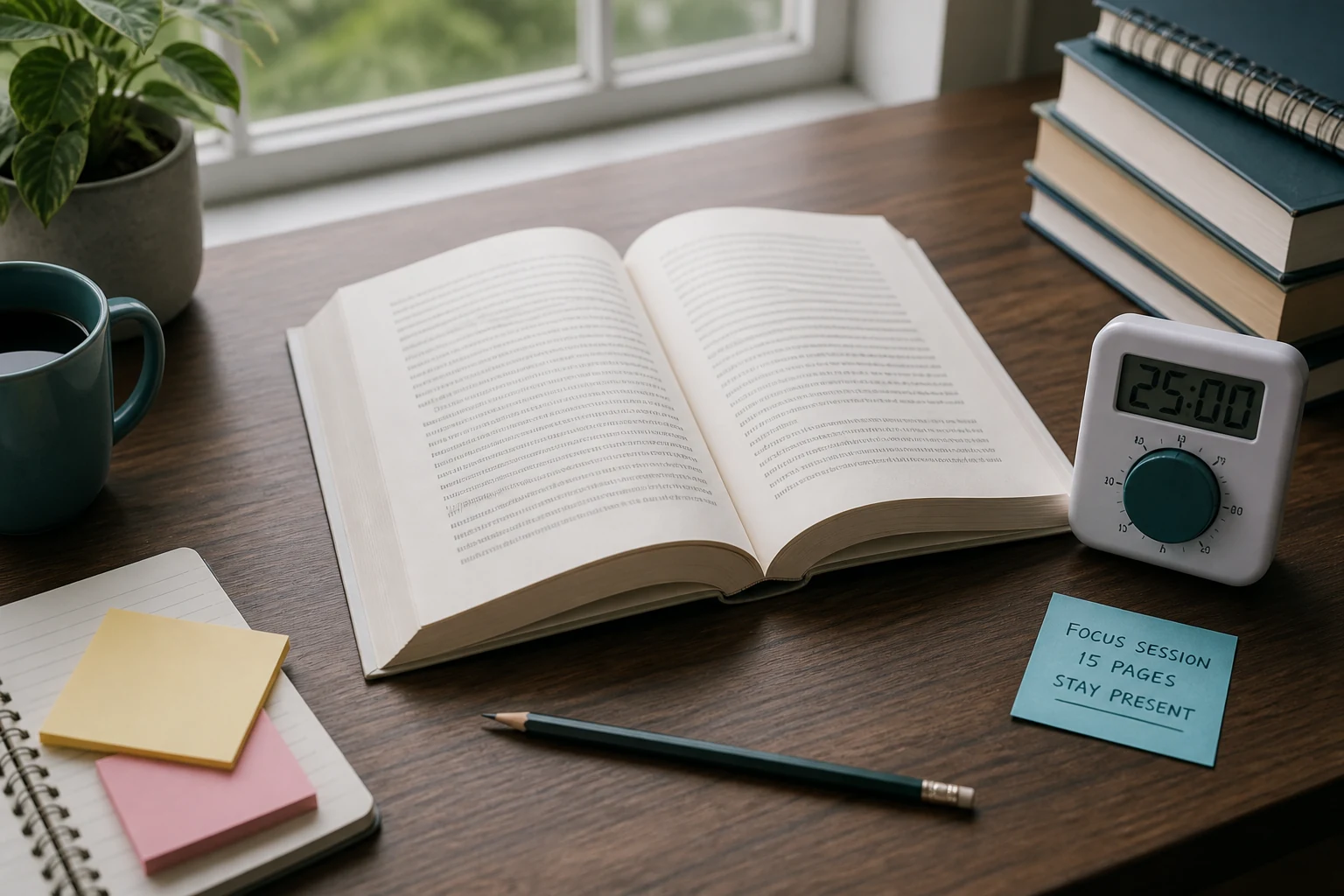
If you are asking how long does it take to read 15 pages, the practical answer is usually 15 to 30 minutes for silent reading, depending on page density, reading speed, and how carefully you need to understand the material. Light fiction or familiar nonfiction may take closer to 15 to 20 minutes. A dense PDF, textbook chapter, legal document, or research article can take 30 minutes or more. The best estimate comes from combining page count with words per page and your words per minute. If you do not know your current pace, a free reading speed baseline can make the estimate much less guessy.
Quick Answer: 15 Pages Usually Takes 15 to 30 Minutes
For many adult readers, 15 average book pages equals roughly 3,750 to 4,500 words. At 250 words per minute, that is about 15 to 18 minutes. At 200 words per minute, it is about 19 to 23 minutes. At 150 words per minute, it is closer to 25 to 30 minutes.
That range changes quickly when the page is not a typical book page. A double-spaced school assignment may have fewer words per page, so 15 pages may feel surprisingly quick. A single-spaced PDF, textbook chapter, academic article, or report may have 450 to 600 words per page, which can turn the same 15 pages into a 35 to 60 minute task if you are reading carefully.
Here is a simple estimate for silent reading:
| Page type | Approx. words per page | Total words in 15 pages | At 200 WPM | At 250 WPM | At 300 WPM |
|---|---|---|---|---|---|
| Light layout or double spaced | 200 | 3,000 | 15 min | 12 min | 10 min |
| Typical book page | 250-300 | 3,750-4,500 | 19-23 min | 15-18 min | 13-15 min |
| Dense nonfiction or PDF | 400 | 6,000 | 30 min | 24 min | 20 min |
| Single-spaced academic page | 500 | 7,500 | 38 min | 30 min | 25 min |
So, is 15 pages a short read? Usually yes, if the material is familiar and your goal is general understanding. It becomes a serious reading block when the text is dense, unfamiliar, or tied to notes, highlighting, discussion, or an exam.
How to Calculate Reading Time for 15 Pages
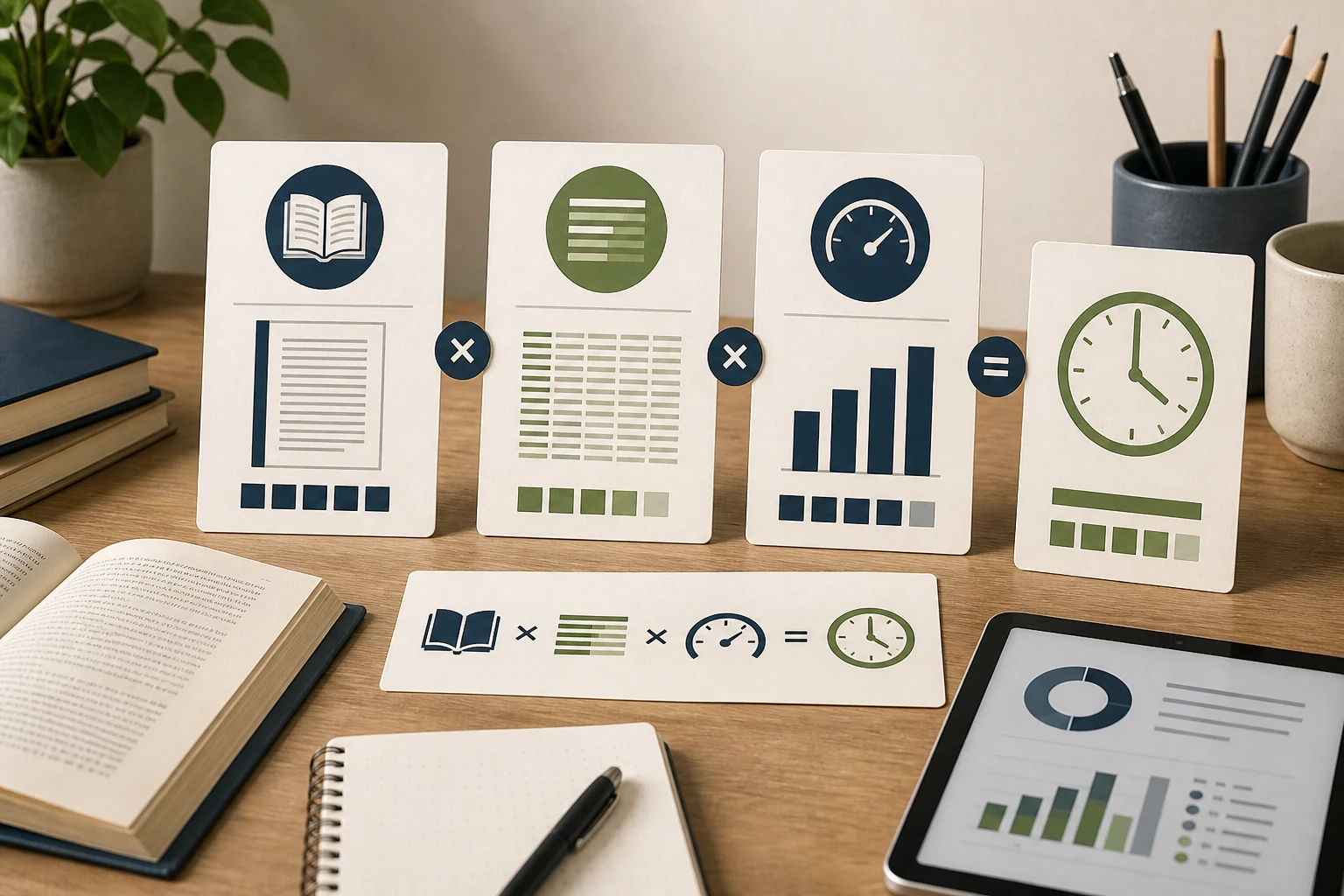
The most useful formula is:
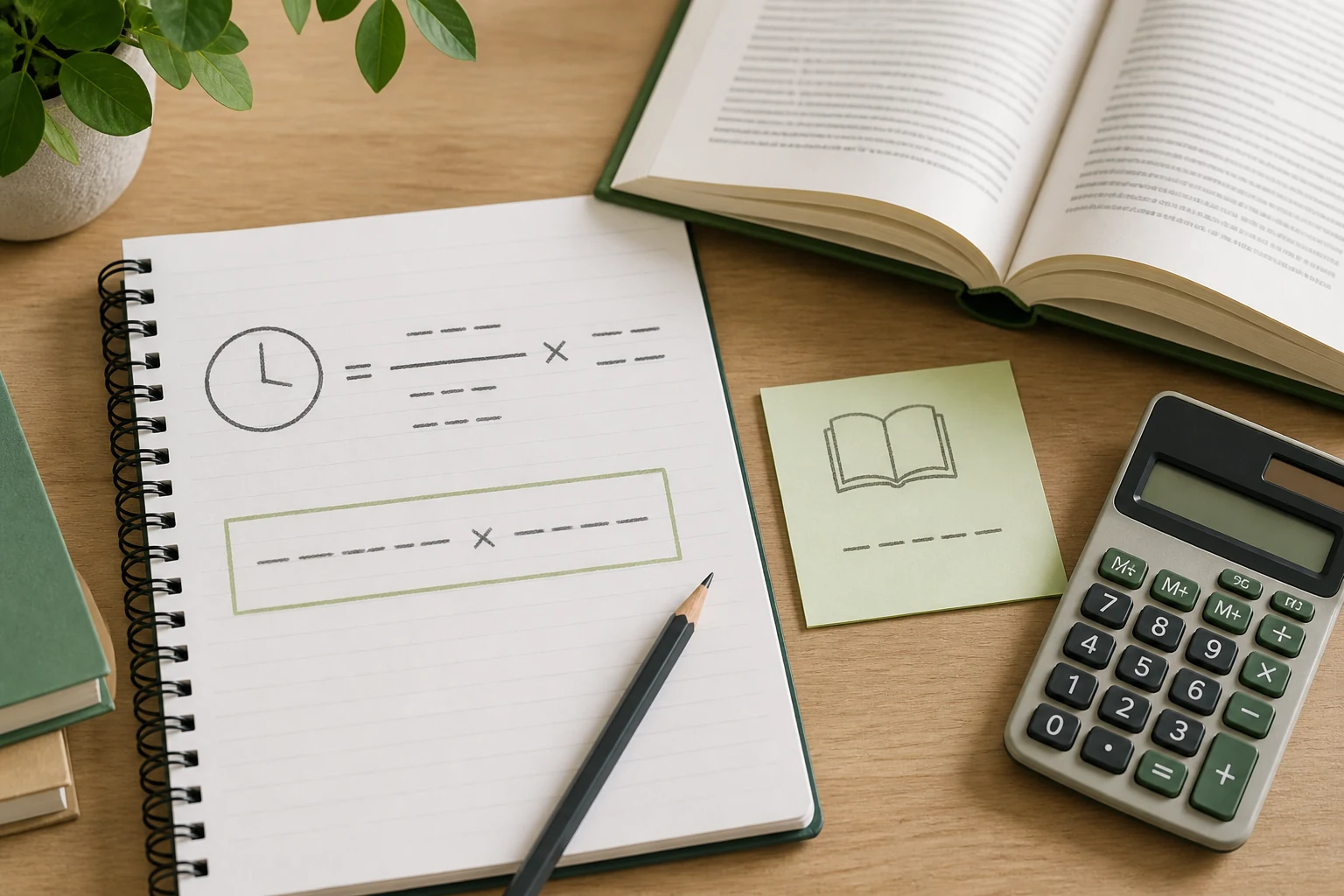
Reading time in minutes = total words / your WPM
To get total words, multiply pages by the estimated words per page:
15 pages x words per page = total words
If you are estimating a novel, use 250 to 300 words per page. If you are estimating a printed essay, use 300 to 400. If you are estimating a dense PDF or textbook, use 400 to 600. Then divide by your reading speed.
For example, 15 pages of a novel at 275 words per page is about 4,125 words. If you read at 250 WPM, the estimate is 16.5 minutes. If you read at 180 WPM because you are tired or the material is harder, the same pages take about 23 minutes.
This is why a reading timer or read time estimator should never rely on page count alone. Page count is visible, but word density is what creates the real workload. A page with wide margins and short dialogue is not the same task as a page packed with definitions, citations, formulas, or unfamiliar vocabulary.
If you want a steadier number, use a reading speed and comprehension check before planning a longer session. A WPM number measured from actual reading is more useful than assuming you read at the average speed every time.
What Changes the Estimate?
The same 15 pages can be easy, tiring, or surprisingly slow. Before you judge your pace, check these factors.
Text difficulty matters first. Familiar fiction, personal development writing, and narrative nonfiction usually move faster because sentence structure and vocabulary are easier to predict. Technical manuals, legal writing, philosophy, research papers, and textbooks often require slower reading because you are decoding ideas, not just words.
Purpose also changes speed. Skimming 15 pages for the main point might take 8 to 12 minutes. Reading for class discussion may take 25 to 45 minutes because you pause, annotate, and connect ideas. Reading to memorize, solve problems, or write a response can take even longer.
Format has a hidden effect. A printed paperback, a large tablet, a phone screen, and a PDF on a laptop all change line length, eye movement, and fatigue. PDF pages are especially tricky because a "page" might contain two columns, small font, footnotes, charts, or references.
Attention is the quiet variable. If you check messages, reread lines, or lose your place, the time expands. That does not mean you are a slow reader. It means the session includes interruptions. When timing yourself, separate pure reading time from total clock time.
Finally, comprehension should stay in the estimate. Reading 15 pages fast but remembering little is not very useful for studying or work. A realistic reading time includes enough pace control to understand the material.
How Long Does It Take to Read 10, 20, 90, or 170 Pages?
Once you know the 15 page estimate, nearby page counts become easy to scale. For a typical book page of 250 to 300 words and a reading speed of 200 to 300 WPM, use this quick guide:
| Pages | Typical silent reading time |
|---|---|
| 10 pages | 8 to 15 minutes |
| 15 pages | 13 to 23 minutes |
| 20 pages | 17 to 30 minutes |
| 50 pages | 40 to 75 minutes |
| 90 pages of a book | 1.25 to 2.25 hours |
| 100 pages of a novel | 1.4 to 2.5 hours |
| 170 pages | 2.4 to 4.25 hours |
These estimates assume steady silent reading and average page density. They do not include note-taking, rereading, breaks, or searching unfamiliar terms.
For a 100 page novel, the estimate is often shorter than people expect because fiction pages tend to have dialogue, paragraph breaks, and familiar narrative flow. For 90 pages of a textbook, the estimate may be much longer because the reader is studying, not simply moving through pages.
For 170 pages, plan in blocks. Even if the math says you could finish in three hours, comprehension usually improves when you divide the work into 25 to 45 minute sessions with short breaks.
How Long Does It Take to Read 2000 or 2500 Words Out Loud?
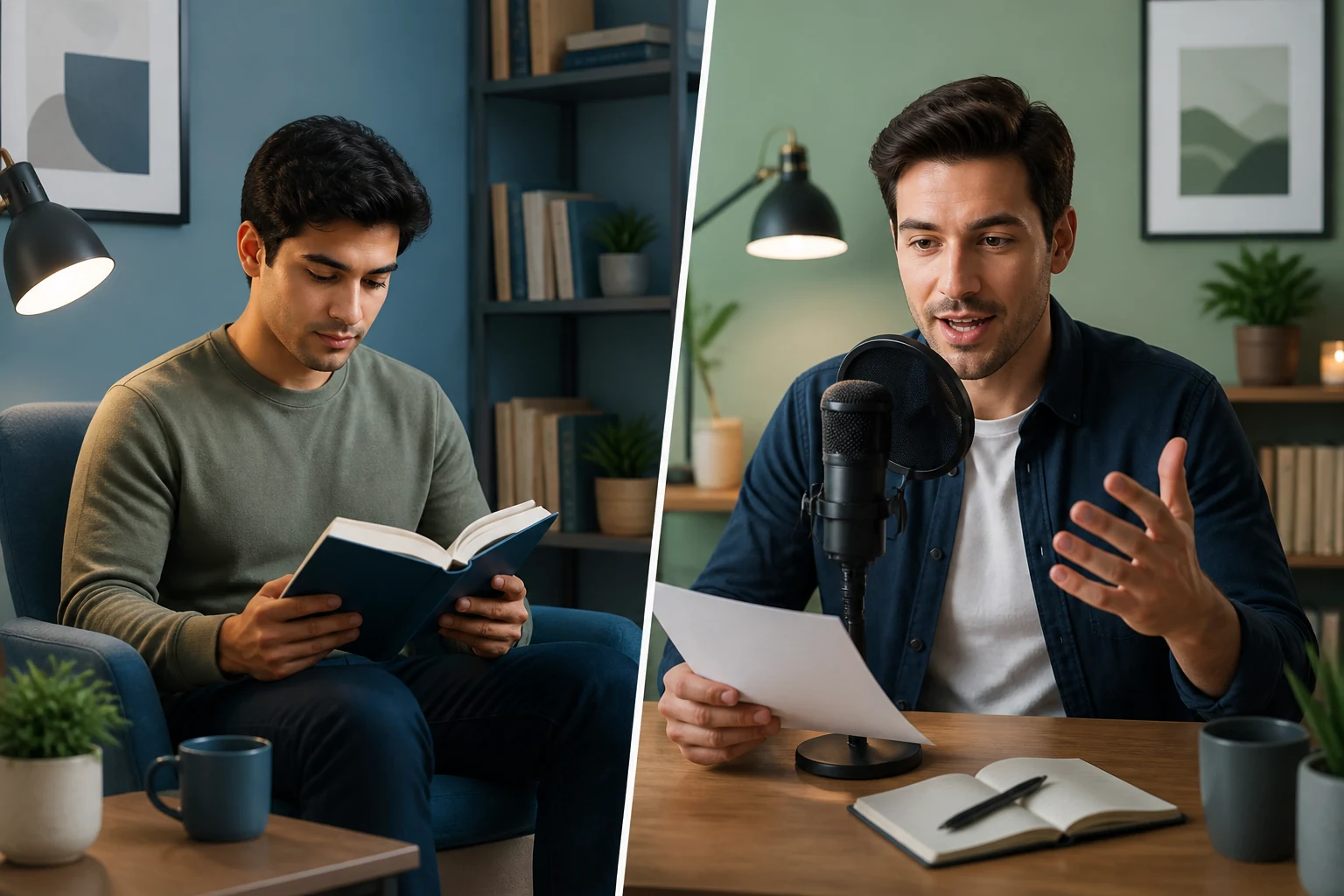
Reading out loud is usually slower than silent reading. Many people speak clearly at about 130 to 170 words per minute. Presentations, narration, teaching, and careful public speaking often sit in that range because the reader adds pauses, emphasis, and breathing space.
That means 2,000 words out loud usually takes about 12 to 15 minutes. At a slower, very clear pace of 120 WPM, it takes about 17 minutes. At a brisk 180 WPM, it takes about 11 minutes.
For 2,500 words, expect about 15 to 21 minutes, depending on how polished the delivery needs to be. If the text includes quotes, names, numbers, technical terms, or audience pauses, add extra time.
Silent reading is different. A person who silently reads at 250 WPM can finish 2,500 words in about 10 minutes, but that does not mean the same person can speak it clearly in 10 minutes. Voice, breath, audience comprehension, and pacing all slow the clock in useful ways.
Is Reading 20 Pages an Hour Slow?
Reading 20 pages an hour is not automatically slow. It depends on the words per page and the reason you are reading. If the pages are dense, 20 pages per hour can be a careful and reasonable pace. If the pages are light fiction, it may be slower than average, but still normal for someone who is tired, distracted, reading in a second language, or choosing to savor the book.
A better question is whether your pace fits your goal. For leisure reading, comfort matters. For study reading, comprehension and recall matter. For work reading, the goal may be to identify decisions, risks, and action items rather than absorb every sentence.
If you want to improve, focus on one bottleneck at a time:
- Reduce unnecessary rereading by using a finger, cursor, or bookmark edge as a guide.
- Preview headings before you begin so your brain has a map.
- Read in short blocks and write a one-sentence recap after each block.
- Save slow, careful rereading for the passages that actually matter.
- Compare your WPM and comprehension over time rather than judging one session.
Fast reading is useful only when it still leaves you with enough understanding for the task. A fast reading habit should feel controlled, not rushed.
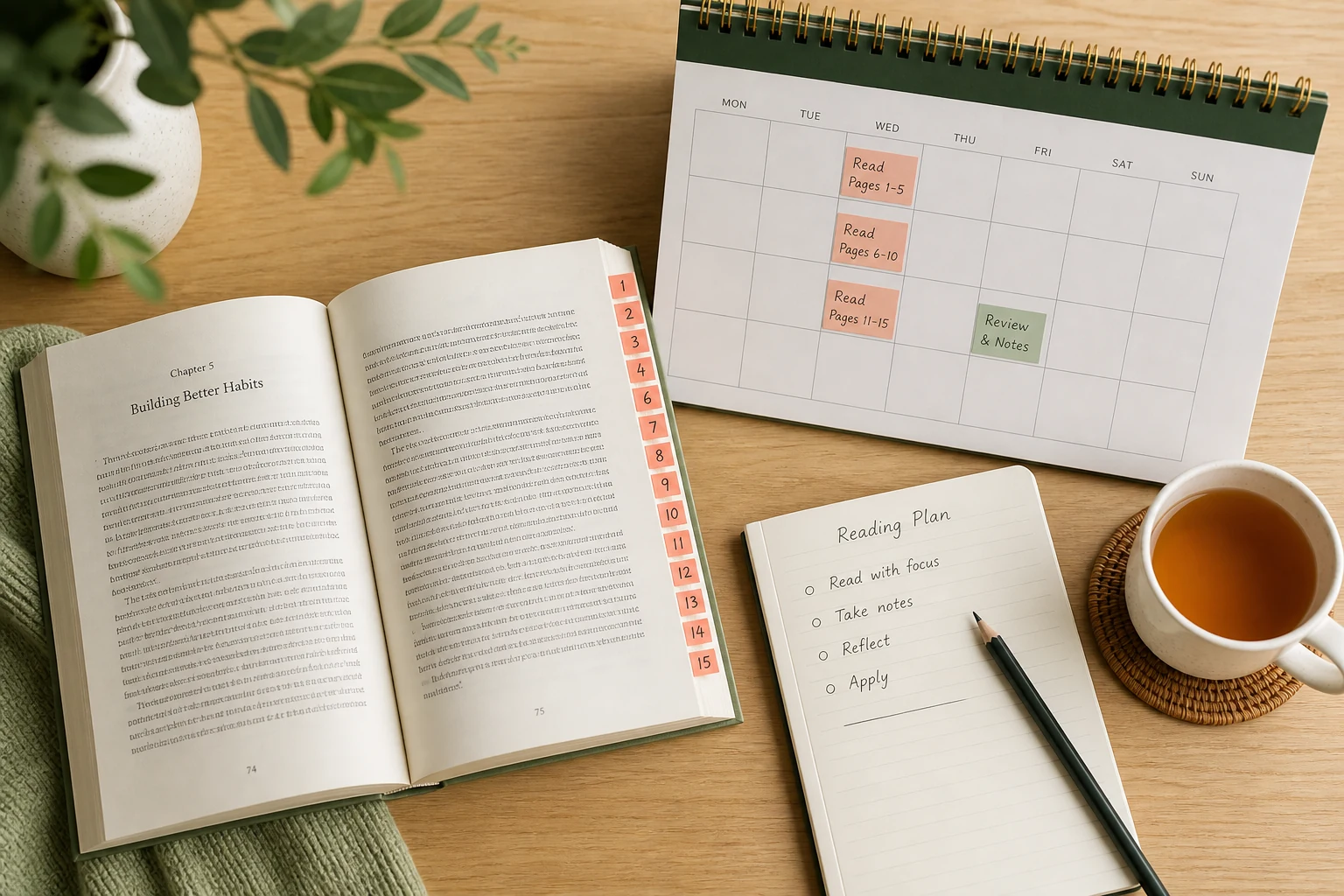
A Simple 15 Page Reading Plan
If you need to read 15 pages today, use a plan that matches the material.
For light or familiar reading, set a 20 minute block. Put your phone away, read without stopping, and mark only the places you want to revisit. After the block, write one sentence about what changed, what happened, or what the section argued.
For textbook or academic reading, set a 35 to 45 minute block. Spend the first 3 minutes previewing headings, figures, summaries, or discussion questions. Read in 5 page chunks. After each chunk, pause for 30 seconds and say the main point in your own words. If you cannot summarize it, slow down before moving on.
For work documents, set a purpose before reading. Are you checking for facts, making a decision, preparing a response, or learning background context? The purpose tells you whether to skim, read closely, or annotate.
For PDFs, adjust the view before timing yourself. Use a comfortable zoom level, avoid tiny two-column layouts when possible, and keep the line width readable. A poor screen setup can make 15 pages feel much heavier than the same pages in a book.
For reading aloud, practice once silently first if the stakes are high. Mark names, numbers, pauses, and transitions. Then read aloud at a clear pace and add 10 to 20 percent extra time for natural delivery.
Build a More Accurate Reading Baseline
The cleanest answer to how long does it take to read 15 pages is personal: count the words on a representative page, multiply by 15, and divide by your real WPM. Then adjust for difficulty, purpose, format, and whether you are reading silently or aloud.
For most everyday reading, 15 pages is a manageable 15 to 30 minute session. For dense study material, it can be closer to a full hour once notes and review are included. Neither result is a failure. It is simply information you can use to plan better.
If you want your estimate to reflect how you actually read, review your pace with the Reading Speed Test tools, then retest after a few weeks of focused practice. Treat the number as an educational snapshot, not a fixed label. The real win is finding the fastest pace at which you still understand, remember, and can use what you read.
FAQ
How long does it take to read 15 pages pdf?
A 15 page PDF can take 15 minutes or more than an hour. If the PDF has large font and open spacing, it may read like a normal book chapter. If it has small type, two columns, tables, citations, or technical vocabulary, estimate by words per page rather than by page count.
How many pages is 2 hours of reading?
For many adults reading average book pages, 2 hours may cover about 60 to 120 pages. The lower end fits slower reading, dense nonfiction, or study reading. The higher end fits easier fiction or familiar material. If you are taking notes, expect fewer pages.
Can I read 70 pages in 1 hour?
Yes, some readers can read 70 pages in 1 hour when the pages are light and the goal is general understanding. It is harder with textbooks, research articles, or unfamiliar topics. For deep comprehension, 70 pages per hour may be too fast for many readers.
Is reading 50 pages in 2 hours slow?
Reading 50 pages in 2 hours is about 25 pages per hour. That can be normal for dense nonfiction, school reading, second-language reading, or any material that requires notes. For easy fiction, it may be slower than average, but it is not automatically a problem.
How long does it take to read 1000 words aloud?
At a clear speaking pace of 130 to 170 words per minute, 1,000 words aloud usually takes about 6 to 8 minutes. Add extra time if you need pauses, dramatic emphasis, audience interaction, or careful pronunciation.
How many pages should I read a day?
Choose a page goal you can repeat. For many people, 10 to 20 pages a day is enough to build momentum without feeling heavy. If the material is dense, a time goal such as 25 focused minutes may work better than a page goal.