How to Read Textbooks Faster Without Losing Comprehension
August 13, 2026 | By Liam Spencer
Learning how to read textbooks faster is not the same as forcing your eyes across every line at top speed. Textbooks are dense because they contain definitions, examples, diagrams, arguments, practice problems, and review cues in the same chapter. The fastest useful reader is not the person who touches every word once; it is the person who knows when to preview, when to slow down, when to take notes, and when to test recall. Before you change your routine, it can help to establish a realistic reading speed baseline so you can track speed and comprehension together instead of chasing WPM alone.
Start With a Goal, Not a Page Count
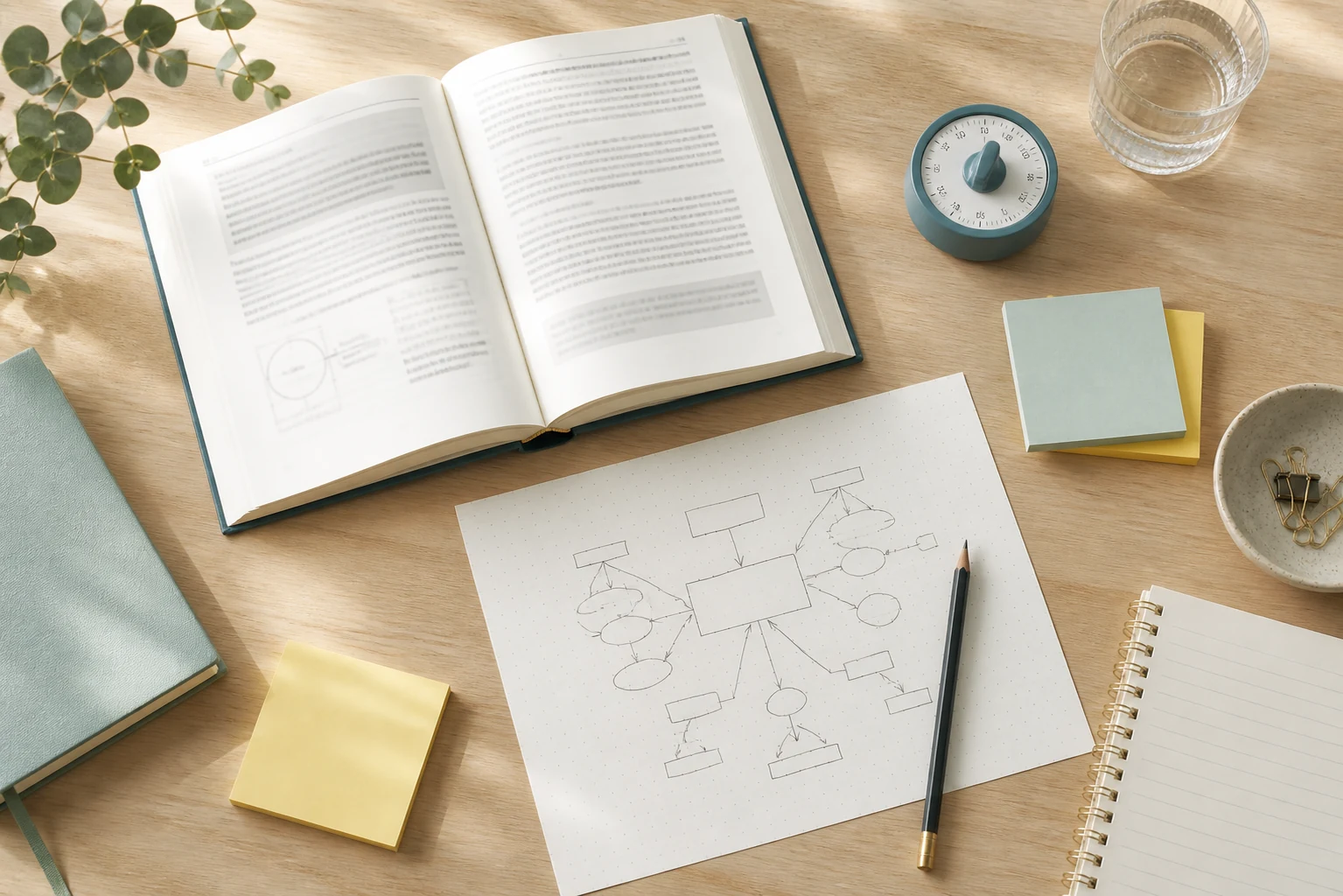
Most slow textbook reading begins with the wrong target: "I need to finish 35 pages." A better target is: "I need to understand the three ideas my professor is likely to build on tomorrow," or "I need to solve the practice problems at the end of the section." A page count tells you how much paper is ahead. A reading goal tells you what attention is for.
Before you read, write one sentence that names the outcome. For a biology chapter, the goal might be to explain a process from memory. For a history chapter, it might be to identify the main cause-and-effect chain. For a statistics chapter, it might be to understand when a formula applies. This purpose changes how quickly you move. Definitions, worked examples, summaries, and diagrams may deserve more time. Anecdotes, repeated examples, and familiar background can often be skimmed.
Use a quick survey before serious reading. Scan the title, headings, bold terms, figures, end-of-chapter questions, summaries, and review boxes. This should take five to ten minutes, not half the session. The survey gives your brain a map, which reduces the feeling that every paragraph has equal weight.
Use a Three-Pass Textbook Reading System
The most efficient textbook readers rarely read a chapter once from first page to last page at the same speed. A three-pass system is usually faster because each pass has a different job.
Pass 1: Survey the Structure
In the first pass, do not try to learn everything. Look for the architecture of the chapter. Notice section breaks, recurring terms, visual aids, summaries, formulas, timelines, and example problems. Turn major headings into questions. If a heading says "Causes of Inflation," your question becomes "What causes inflation, and how do the causes differ?"
This pass makes later reading faster because you stop treating the chapter as a wall of text. You can predict where the main ideas are likely to appear and where the author is adding support.
Pass 2: Read for Answers
In the second pass, read to answer the questions you created. Move faster through familiar background and slower through paragraphs that define key terms, explain mechanisms, or connect ideas. If you catch yourself rereading the same sentence repeatedly, pause and ask what question the sentence is trying to answer. That small shift turns passive rereading into active search.
This is also the best place to watch your pace. A simple reading speed and comprehension check can remind you that faster reading only helps when the meaning survives. For textbooks, your target is not maximum speed. Your target is enough speed to finish the assignment and enough understanding to use the material later.
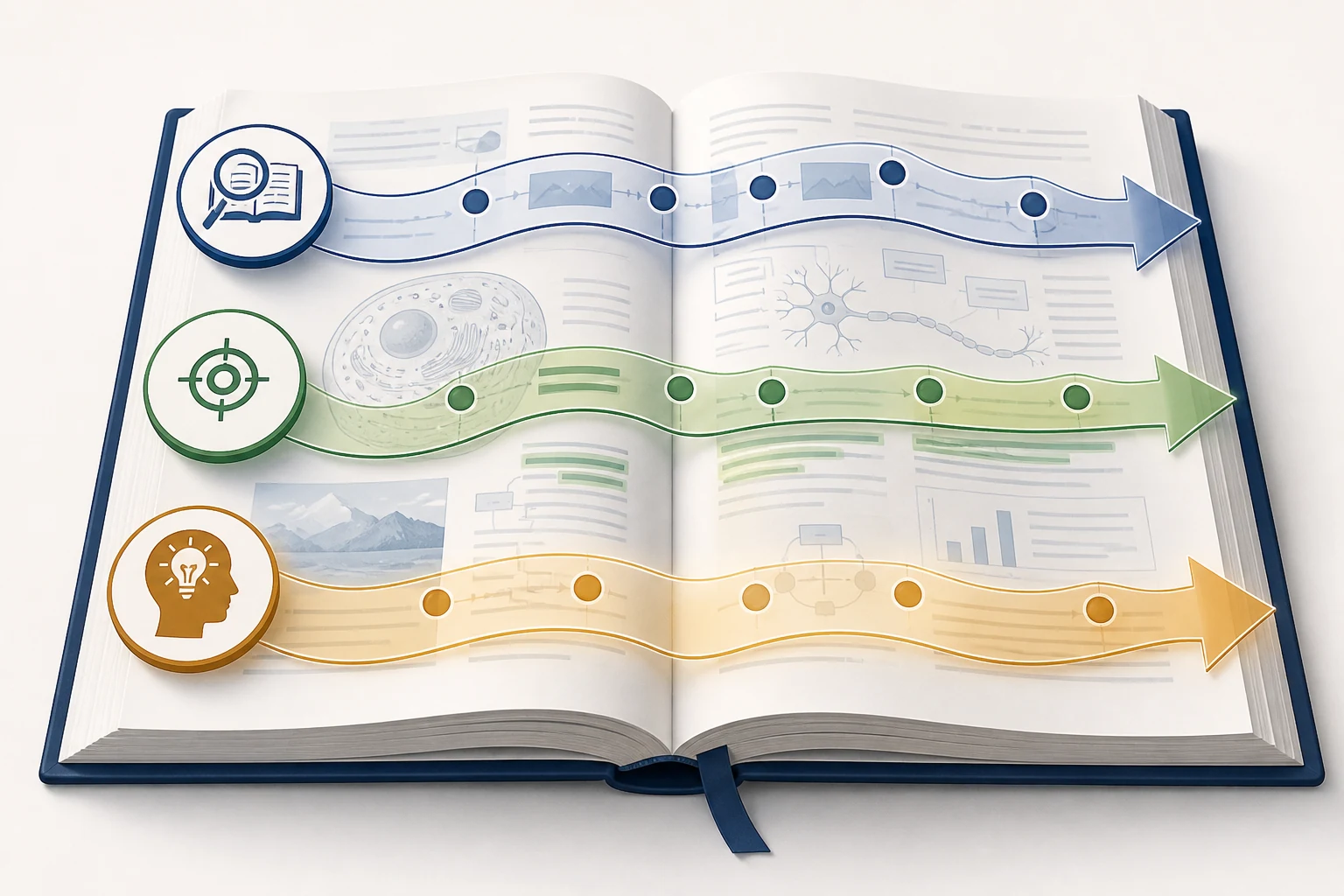
Pass 3: Recall Before You Review
After a section or ten-page chunk, close the textbook and write what you remember. Use bullet points, a concept map, a short paragraph, or a few self-test questions. Then reopen the chapter and fill gaps. This feels slower than highlighting while reading, but it often saves time because it exposes weak understanding immediately.
Review should not mean rereading the entire chapter. It should mean revisiting the ideas you could not explain, the terms you mixed up, and the examples that show how the concept works.
How to Read and Take Notes Faster
Many students lose time because they take notes too early. If you copy while reading the first sentence of a paragraph, you may discover by the third sentence that the real point was different. A faster system is to read a short section first, then write a compact note after you know what matters.
Try the "question, answer, evidence" note pattern:
- Write the question the section answers.
- Answer it in one or two sentences in your own words.
- Add one example, formula, date, case, or page reference as evidence.
This pattern keeps notes short and useful. It also works for Cornell-style notes because the left side can hold the question and the right side can hold the answer. For history, the question might be "Why did this policy create conflict?" For science, it might be "What happens first in this process?" For literature, it might be "How does this passage reveal the narrator's point of view?"
Highlight less than you want to. Mark key phrases, terms, and transitions, not full paragraphs. A good highlight should help you rebuild the idea later without rereading the whole page. If half the page is marked, your future self still has to do the sorting work.
Adjust Your Method by Subject
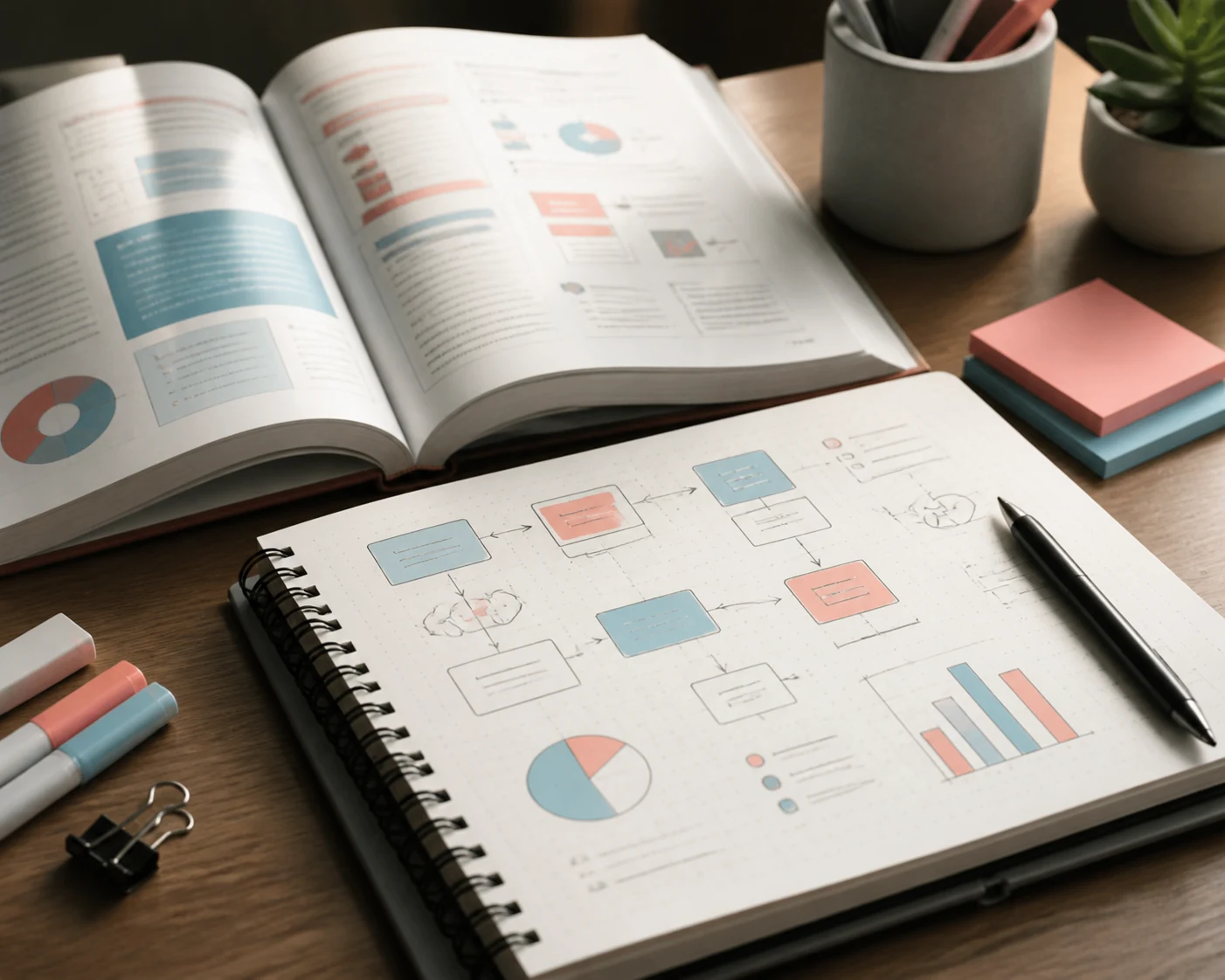
There is no single textbook method that fits every course. Faster reading comes from matching the strategy to the material.
For STEM textbooks, prioritize definitions, diagrams, formulas, and worked examples. Do not merely read a solved problem. Cover the solution, try the next step yourself, then compare. If you can explain why each step happens, you are reading with understanding.
For history textbooks, build timelines, cause-and-effect chains, and actor maps. Dates matter most when they help explain sequence and consequence. Avoid copying every name. Instead, ask who made a decision, what options they had, and what changed afterward.
For social science textbooks, separate theory, evidence, and application. Many chapters introduce a concept, describe research, then apply the idea to a case. If you know which paragraph is doing which job, you can move faster without losing the argument.
For literature or philosophy, speed comes from previewing the argument and reading selectively with questions. You may need to slow down for key passages because the wording itself matters. Faster does not always mean fewer minutes per page; sometimes it means fewer wasted rereads.
Reading Textbooks With ADHD or Low Focus Days
If attention is difficult, do not build a textbook plan around perfect concentration. Build it around short starts, visible progress, and recovery points. This article is educational, not medical advice, and it cannot evaluate attention concerns. But many readers, including students with ADHD, benefit from reducing friction.
Use smaller reading blocks. Five to ten pages is often more realistic than one long chapter push. Set a visible timer for 15 to 25 minutes and decide the exact stopping point before you begin. Keep a scrap sheet next to you for distraction notes. When an unrelated thought appears, write it down and return to the page instead of negotiating with it mentally.
Make the task physical when possible. Point with a pen, cover completed lines with an index card, or stand up for a short review. If you use a digital textbook, reduce tab switching and learn the platform controls before the reading session. Searching, scrolling, and losing your place can quietly steal more time than the reading itself.
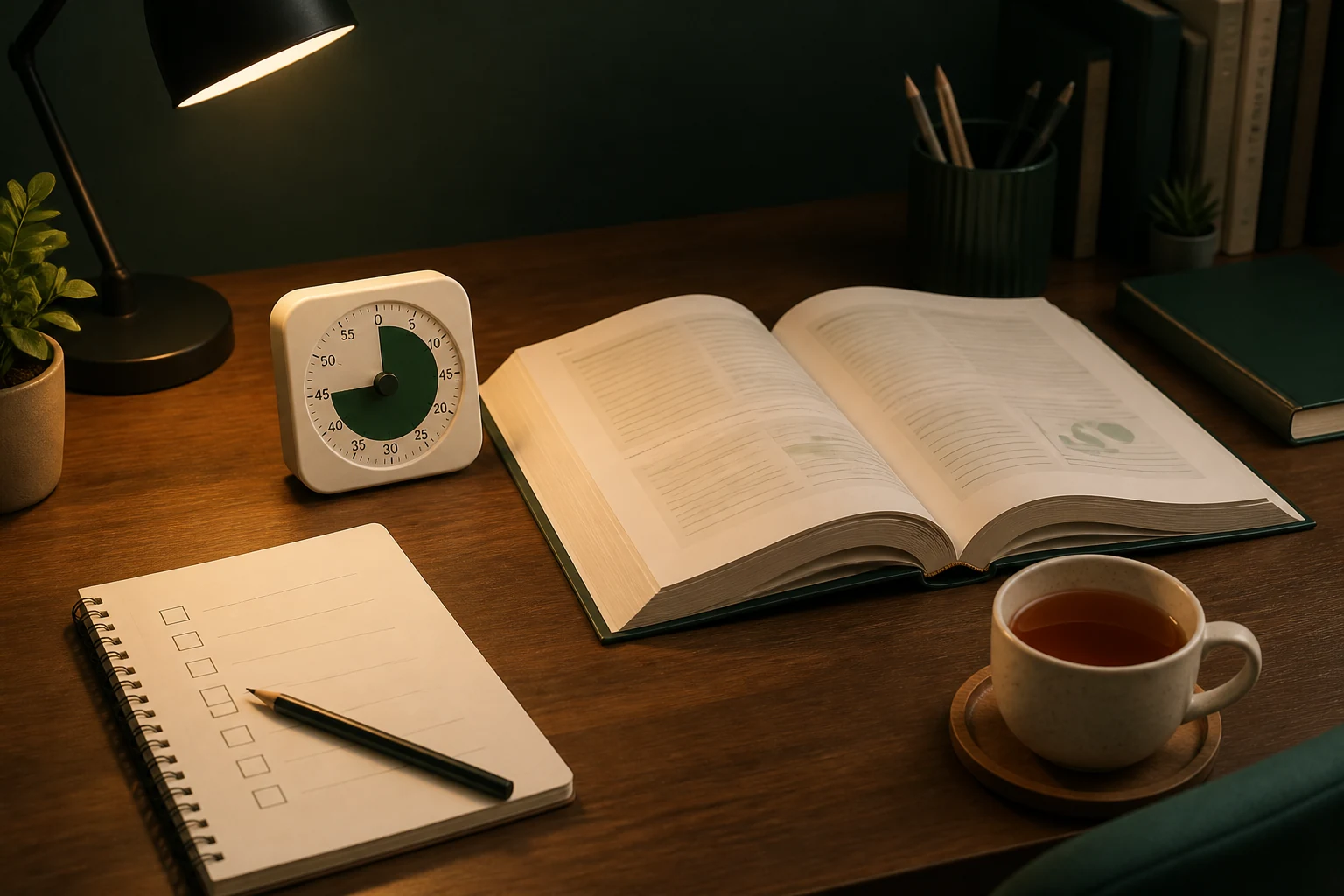
A 45-Minute Workflow for a Long Chapter
When a chapter feels too long, use a timed workflow instead of waiting for motivation.
First, spend five minutes surveying the chapter. Read headings, captions, summaries, vocabulary lists, and review questions. Mark the two or three sections that look most central.
Second, spend twenty minutes on focused reading. Read the central sections first, not necessarily the first page. Turn headings into questions and answer them in your notes. Slow down for diagrams, formulas, thesis statements, and worked examples.
Third, spend ten minutes on recall. Close the book and write a brief explanation of the main ideas. Create three to five questions you might see on a quiz or discussion board. Answer them without looking.
Fourth, spend five to ten minutes repairing gaps. Reopen only the parts you could not explain. Add missing definitions, correct confused relationships, and flag one question for class, office hours, or a study group.
This workflow will not make every chapter easy, but it prevents the common trap of spending the entire session on the first few pages and ending with no review.
Make Faster Textbook Reading Measurable
The best way to improve is to measure both pace and understanding. Once a week, record how many pages or words you can process in a focused session and what you can explain afterward. If your speed rises but your recall drops, the method needs adjustment. If your recall improves while total reading time falls, your system is working.
You can also use a free WPM and comprehension check as a neutral reference point between study sessions. Treat the result as a baseline, not a label. The goal is to notice patterns: whether you reread often, whether your pace changes on screens, whether comprehension holds when you increase speed, and whether practice is helping over time.
How to read textbooks faster comes down to selective attention. Preview before reading. Read with questions. Take notes after meaning is clear. Recall before reviewing. Then measure your progress in a way that respects comprehension. That system is more reliable than trying to push through every chapter at one fixed speed.
FAQ
What is the fastest way to read a textbook?
The fastest useful way is to preview the chapter, turn headings into questions, read for answers, and recall the main ideas before reviewing. This is faster than reading every page at the same depth because you spend more time on core ideas and less time on familiar or supporting material.
How can I increase book reading speed without losing comprehension?
Start by reducing wasted rereading. Preview the structure, set a purpose, read in short sections, and pause to summarize from memory. Practice moving through familiar context more quickly while slowing down for definitions, examples, and arguments that carry the meaning.
Is reading 100 pages in 2 hours fast?
It depends on page density, subject difficulty, prior knowledge, and comprehension. For a light book, 100 pages in 2 hours may be reasonable. For a dense textbook, it may be too fast if you need to solve problems, remember terms, or explain concepts. Measure understanding, not just pages.
How do I read and take notes faster?
Read a paragraph or short section before writing notes. Then capture the section as a question, a brief answer in your own words, and one piece of evidence or example. This prevents over-copying and creates notes that are easier to review.
What is the 5 finger rule for books?
The 5 finger rule is often used to judge whether a book is at a comfortable reading level: count unfamiliar words on a page, and if there are about five or more, the book may be challenging. For college textbooks, difficulty is expected, so use it as a signal to slow down, preview more, or seek support rather than as a reason to quit.
How do I read long textbook chapters when I am behind?
Do not start by trying to read every missed page equally. Survey the chapter, identify the sections tied to lectures, assignments, or exam questions, and read those first. Then use recall questions to find gaps. If time remains, return to supporting examples and background sections.
Is it better to skim or read every word?
Use both. Skim to understand structure, locate important sections, and avoid spending full attention on low-value repetition. Read carefully when a section introduces a key concept, explains a process, presents evidence, or connects directly to your course goal.